


Let’s be honest, we’ve all been there. You spend hours—maybe days—crafting the perfect blog post. You research the product, you find the right images, and you hit “Publish” with a sense of pride. You check your analytics a few days later and see that people are actually visiting the page. Your heart jumps!
But then you log into your affiliate dashboard, and the story changes.
Clicks: 0. Commissions: $0.00.
It’s like throwing a party where everyone shows up, but nobody touches the snacks. It’s frustrating, it’s discouraging, and it makes you wonder if this “affiliate marketing thing” actually works.
I’m here to tell you that it does work, but there is often a disconnect between someone reading your words and someone clicking your link. That disconnect is measured by your affiliate link click through rate (CTR). If your CTR is low, your commissions will stay low, no matter how much traffic you have.
In this guide, we are going to dive deep into why those clicks aren’t happening and, more importantly, exactly how you can turn things around. Let’s get your links clicked.
Grab your FREE Affiliate Success Checklist Here
What Is Affiliate Link Click Through Rate?
Before we fix the problem, we have to understand the metric. In simple terms, your affiliate link click through rate (CTR) is the percentage of people who see your link (impressions) and actually click on it.
Think of it as the “bridge” in your sales funnel.
- Traffic gets them to the bridge.
- CTR gets them across the bridge to the merchant’s site.
- Conversion Rate (on the merchant’s end) gets them to buy.
How to Calculate CTR
The formula is straightforward:
(Total Clicks ÷ Total Impressions or Visitors) x 100 = CTR%
For example, if 1,000 people read your product review and 20 people click your affiliate link, your CTR is 2%.
Why Does CTR Matter So Much?
You might think, “I just need more traffic!” But traffic is expensive (in time or money). If you have 10,000 visitors with a 0.1% CTR, you get 10 clicks. If you improve your CTR to 2%, those same 10,000 visitors yield 200 clicks.
Improving your CTR is the fastest way to “give yourself a raise” without needing to find a single new visitor. It shows that your audience trusts your recommendations and that your content is doing its job.
Common Reasons for a Low Affiliate Link Click Through Rate
If your dashboard is looking a little lonely, it’s usually due to one of these “Click-Through Killers.” Let’s look at them honestly.
1. Weak or Unclear Call to Action (CTA)
A “Call to Action” is exactly what it sounds like: you are telling the reader what to do next. Beginners often make the mistake of being too shy. They drop a link and hope the reader figures it out.
The Killer: Using vague phrases like “Click here” or “Check this out.” Readers are busy. If you don’t give them a reason to click, they won’t. If your link is just a blue underlined word in the middle of a paragraph with no instruction, it will be ignored.
2. Poor Link Placement
Where you put your link matters just as much as what the link says.
The Killer: Burying your link at the very bottom of a 2,000-word post. Most readers are “skimmers.” They might read the first few paragraphs, scroll down to see the subheadings, and then leave. If your only affiliate link is in the final sentence, 80% of your audience might never even see it. Conversely, putting a link in the first sentence before you’ve provided any value can feel spammy and turn people off.
3. The Trust Gap (Lack of Credibility)
Affiliate marketing is built on recommendations. If your readers don’t trust you, they aren’t going to follow your advice.
The Killer: Sounding like a salesperson instead of a helpful friend. If your content is 100% “this is the best thing ever” without mentioning a single con or downside, readers get suspicious. Furthermore, if you haven’t included a clear affiliate disclosure, you’re not just breaking FTC rules—you’re also looking like you have something to hide. Transparency actually builds clicks; secrecy kills them.
4. Irrelevant Content-Offer Match
This is a classic “mismatch” problem.
The Killer: Promoting a high-end DSLR camera in a blog post about “How to bake a cake on a budget.” Even if the camera is amazing, it’s not what the reader is looking for at that moment. When the offer doesn’t solve the specific problem the reader came to your page to solve, they won’t click.
5. Disruptive Design and “Link Overload”
Sometimes, we get a little too excited and turn our blog posts into a digital minefield of links.
The Killer: Too many links, pop-ups, and flashing banners. When every third word is a link, the reader’s brain experiences “choice paralysis.” They don’t know which one is important, so they click none of them. Additionally, if your site is cluttered with ads or intrusive pop-ups, the reader will likely hit the “back” button before they even get to your affiliate link.
Check out my Escape Plan IS1 Review Here
How to Improve Your Affiliate Link Click Through Rate
Now that we’ve identified the killers, let’s talk about the cure. Improving your CTR isn’t about “tricking” people; it’s about making it as easy and logical as possible for them to take the next step.
1. Writing Compelling Calls to Action
Stop using “Click Here.” Instead, use Benefit-Driven CTAs. Your CTA should tell the reader exactly what they will get when they click.
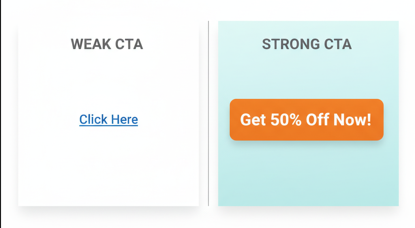
- Weak: [Click here for the software]
- Better: [Check the current price on Amazon]
- Best: [Get 20% off your first month of Software X here]
Pro Tip: Use “Action Verbs.” Words like Grab, Get, Claim, Discover, or Join create a sense of movement.
2. Optimizing Link Placement for Better Visibility
Don’t play hide-and-seek with your links. Follow the “Rule of Three” for long-form content:
- Early: Place a link near the beginning (after the introduction) for “fast” readers who already know they want the solution.
- Middle: Use a “Contextual Link” (a text link) in the heart of your explanation.
- End: Use a prominent button or a final recommendation at the conclusion.
Buttons vs. Text: Use both! Text links feel natural and editorial, while buttons are highly visible and great for mobile users who have “fat fingers” and struggle to click small text.
3. Building Trust with Your Audience
To get the click, you must be seen as an authority—or at least a reliable peer.
- Be Honest: If a product has a flaw, say it. “This tool is great for beginners, but professionals might find it lacks advanced features.” This honesty makes your “Buy” recommendation much more believable.
- Use Personal Photos: Whenever possible, show yourself using the product. Stock photos look like ads. Your own blurry smartphone photo looks like a real recommendation.
- Clear Disclosures: Put your affiliate disclosure at the top of the post. Something like: “I may earn a small commission if you buy through my links, at no extra cost to you. This helps me keep the lights on!” It’s human and professional.
4. Making Sure Your Content Matches the Offer
This is called “Alignment.” If you are writing a review of a specific vacuum cleaner, your primary link should be to that vacuum cleaner.
If you are writing a “Top 10” list, ensure the #1 recommendation is clearly highlighted. The reader’s journey should be a straight line:
- Problem: My floors are dirty.
- Content: Here are the 5 best vacuums.
- Solution/Link: Buy the #1 rated vacuum here.
5. Testing, Tracking, and Tweaking
You can’t improve what you don’t measure.
- Use Link Cloakers: Tools like Pretty Links or ThirstyAffiliates (for WordPress) allow you to turn long, ugly affiliate URLs into clean ones (e.g., yoursite.com/recommends/product). They also provide built-in click tracking.
- A/B Test Your CTAs: This week, try a blue button that says “Buy Now.” Next week, try an orange button that says “Check Availability.” See which one gets more clicks. Small changes can lead to huge results.
Read my recent post: Affiliate Marketing for Total Beginners: The Only Steps You Need
Frequently Asked Questions (FAQ)
What is a “good” affiliate link CTR?
This varies wildly by niche. In some industries, a 1% CTR is decent. In others, like high-intent product reviews, you might see 10% or higher. Don’t worry about “industry standards” yet. Your goal is simply to make your CTR better than it was last month.
Should I use text links or buttons?
The short answer: Both. Text links are excellent for “in-the-flow” reading where you don’t want to disrupt the reader’s focus. Buttons are excellent for “skimmers” who are looking for a quick way to get to the product. A mix of 70% text links and 30% buttons is a great starting point.
How many affiliate links is too many?
There is no “magic number,” but a good rule of thumb is to have one link every 300–500 words, plus a dedicated “Product Box” or button for the main offer. If your post looks like a blue-text sea of links, you’ve gone too far. Focus on quality placement over quantity.
Conclusion: Stop Leaving Money on the Table
Remember, a low affiliate link click through rate isn’t a sign that you should quit. It’s actually a sign of an opportunity. It means you’ve already done the hard work of getting people to your site—now you just need to refine the “ask.”
Here is your 3-step action plan for today:
- Go to your most popular post.
- Add a link or button “Above the Fold” (the part of the page people see without scrolling).
- Rewrite your CTA to focus on a benefit (e.g., “Check the Discount” instead of “Click Here”).
Affiliate marketing is a game of small adjustments. By fixing these click-killers, you are turning a “leaky bucket” into a streamlined system that actually rewards your hard work.
What’s your current biggest struggle with affiliate links? Drop a comment below or share this post with a fellow marketer who’s looking for their first click!